


No items found in your cart!
No items found in your cart!

 you definitely can not afford to miss this. READ HERE https://www.goglowonline.com/view-post.php?post_id=198, Thanks for always taking out time to read through our blog posts @ Goglow Limited! We are Happy that you enjoy it!&image=<img src='https://www.goglowonline.com/upload/1789377138images.jpg'/>) |
|
|
|
|
|
|
|
Why do customers choose one product over another? Why does a five-star review make someone feel more confident? Why can a limited-time discount suddenly turn a “maybe” into a “buy”? And why does a professional-looking online store make customers feel safer?
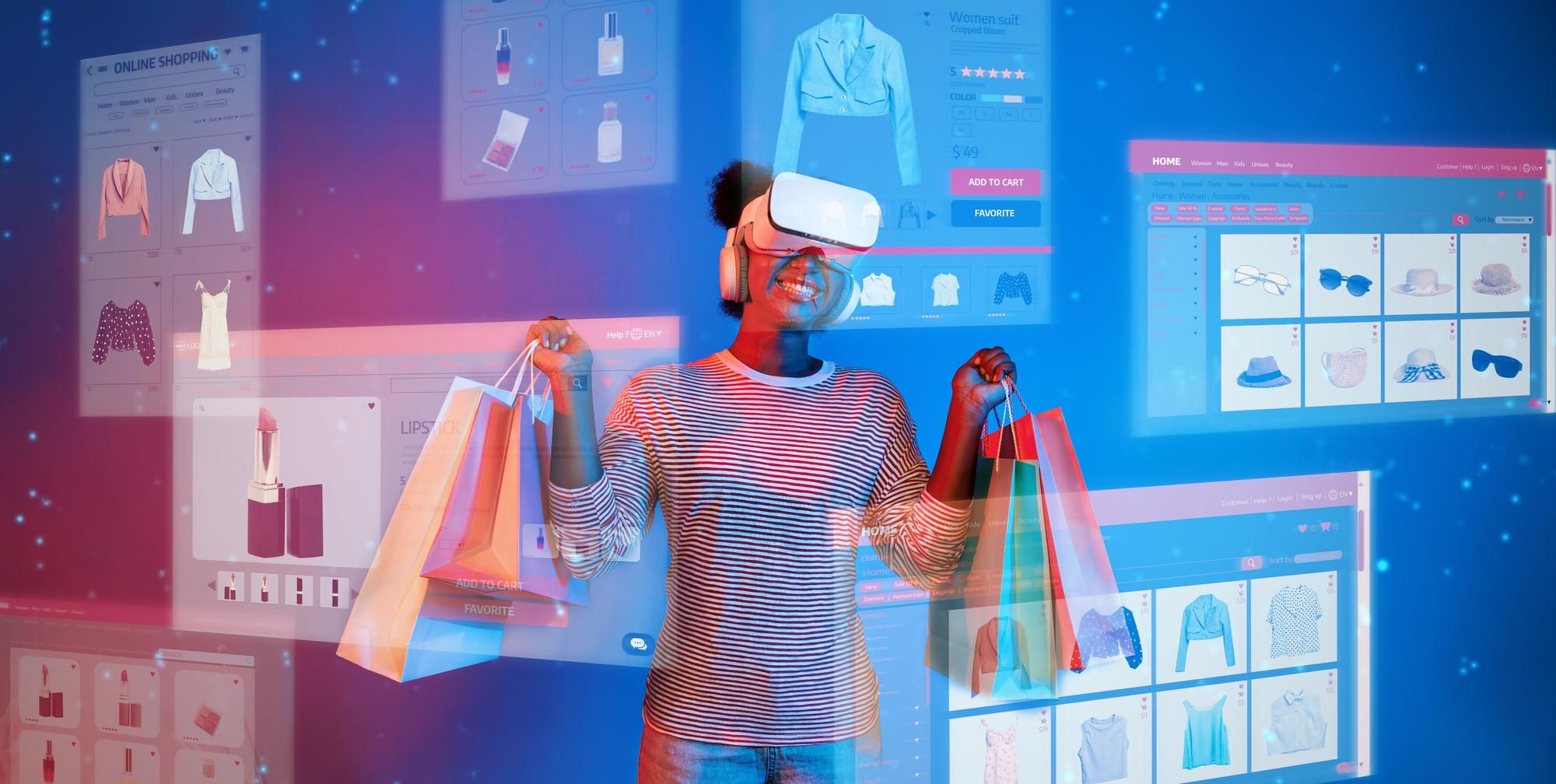
Online shopping is more than simply displaying products and waiting for customers to click “Buy Now.” Behind every online purchase is a psychological process involving trust, emotions, perceived value, social influence, convenience, risk, urgency and personal preferences.
For businesses operating in today's digital marketplace, understanding these psychological factors can make the difference between a customer who simply visits a product page and one who actually completes a purchase.
Let's explore the psychology behind online shopping and the factors that influence purchasing decisions.
One of the biggest psychological barriers to online shopping is trust.
When customers walk into a physical store, they can see the business, inspect products, speak to staff and sometimes take the product home immediately.
Online shopping removes many of these physical assurances.
The customer may be thinking:
Research consistently identifies trust, perceived risk, security and electronic word-of-mouth as important influences on online purchasing decisions.
This is particularly important in markets where consumers may already be cautious about online transactions.
How businesses can build trust
An online store should communicate credibility through:
Trust is not created by one element. It is created by the total customer experience.
Imagine two identical products.
Product A has no reviews.
Product B has 47 reviews, a 4.8-star rating and photographs from previous customers.
Which one would you feel more comfortable buying?
For many shoppers, the answer is obvious.
Reviews act as social proof.
When customers cannot physically inspect a product, they often use the experiences of previous buyers to reduce uncertainty.
Research has found that electronic word-of-mouth significantly influences e-commerce purchasing decisions, while a 2024 meta-analysis covering 156 studies and more than 69,000 observations found that review characteristics significantly affect purchase intention.
Reviews answer questions that product descriptions sometimes cannot:
"Does this actually work?"
"Is the product as advertised?"
"Is the seller reliable?"
"Would someone like me buy this again?"
This is why businesses should actively encourage genuine customers to leave feedback.
Don't hide negative reviews
Interestingly, a store containing only perfect reviews can sometimes appear less believable.
A few genuine negative reviews can make the review ecosystem feel more authentic—provided the business responds professionally and resolves legitimate complaints.
The objective isn't to create the illusion of perfection.
The objective is to demonstrate reliability.
Customers don't only buy products.
They buy perceptions of products.
The same product can feel cheap, average or premium depending on how it is presented.
Consider two online listings for the same pair of shoes.
The first has:
The second has:
Even if both products are identical, the second listing can create significantly greater confidence.
This is because customers use the information available to them to estimate quality and value.
Research examining Nigerian online shopping has also found a strong relationship between trust and perceived website quality, with website quality positively associated with purchase intentions.
Your product page is your digital salesperson
A good product page should answer:
What is it?
Who is it for?
What problem does it solve?
What does it cost?
Why should I trust it?
How will I receive it?
What happens if I don't like it?
The more important questions your product page answers, the less uncertainty the customer has to overcome.
Discounts Create a Sense of Value
Everyone likes a good deal.
But psychologically, discounts do more than reduce prices.
They change how customers perceive value.
For example:
₦100,000 → ₦75,000
The customer doesn't simply see ₦75,000.
They see:
"I am saving ₦25,000."
The original price establishes a reference point against which the discounted price is evaluated.
Discounts can therefore make a purchase feel like an opportunity rather than an expense.
Research has also examined how online coupons can influence sales and how perceived usefulness of coupons can encourage purchases.
But discounts can backfire
If a business constantly offers huge discounts, customers may begin to question the original price.
They may think:
"Was it ever really worth ₦100,000?"
Therefore, businesses should use promotions strategically rather than permanently.
Examples include:
The key is to make the value proposition clear.
Scarcity and Urgency Encourage Action
Have you ever seen:
"Only 2 left!"
or
"Sale ends in 3 hours!"
and suddenly felt more motivated to make a decision?
That's the psychology of scarcity and urgency.
When customers believe an opportunity may disappear, delaying the decision becomes psychologically more costly.
Scarcity can increase perceived product value and influence purchase decisions. Research has also found that scarcity cues can reduce the amount of attention consumers give to product reviews, making this a powerful—but potentially risky—marketing mechanism.
Examples of legitimate urgency
But there is an important rule:
Don't manufacture fake scarcity.
If a website repeatedly says "Only 1 left!" when hundreds are available, customers may eventually lose trust.
Effective e-commerce psychology should create urgency without manipulating customers through false information.
Personalization Makes Customers Feel Understood
Imagine opening an online store and seeing thousands of unrelated products.
Now imagine seeing:
"Recommended for you"
followed by products that actually match your interests.
The second experience feels easier.
Personalization helps reduce the amount of work customers need to do.
Modern e-commerce increasingly uses customer behaviour, browsing history, purchase history and preferences to provide recommendations and targeted experiences. Recent research suggests personalization can improve perceived relevance, satisfaction and loyalty, although privacy, transparency and customer control remain important considerations
Personalization can include:
For example:
Someone buying a projector might also need:
Showing these relevant products doesn't simply increase sales.
It can also make the shopping experience more convenient.
Convenience Is a Psychological Selling Point
Sometimes customers don't choose the cheapest product.
They choose the easiest solution.
Imagine two stores selling the same product for almost the same price.
Store A requires the customer to:
Store B provides:
The second store removes friction.
And when customers experience less friction, purchasing becomes easier.
Every unnecessary step can become a reason to abandon a purchase.
That's why e-commerce businesses should continually ask:
"How can we make buying this product easier?"
Customers Don't Always Buy the Product—They Buy the Outcome
A powerful psychological principle in marketing is the distinction between features and benefits.
A customer may not care that a laptop has a particular processor.
They may care that:
"I can run my business software faster."
A customer may not care that a camera has a particular resolution.
They may care that:
"My security footage will be clearer."
A customer may not care that a smart board has certain technical specifications.
They may care that:
"My classroom can become more interactive."
Therefore, businesses should explain both:
Feature → Benefit → Outcome
For example:
32GB RAM → Faster multitasking → Work efficiently without constantly closing applications.
The psychological difference is important.
Features describe what the product is.
Benefits explain why it matters.
Emotions Influence Purchasing Decisions
Shopping is not always rational.
People often use rational arguments to justify decisions that were initially influenced by emotion.
A customer may buy:
This doesn't mean customers are irrational.
It means purchasing decisions involve both logic and emotion.
Effective product presentation therefore needs both.
Rational appeal
Emotional appeal
The strongest product marketing often connects the two.
Brand Reputation Reduces Perceived Risk
Customers are not only evaluating a product.
They are evaluating the seller behind the product.
A business with:
can appear significantly less risky than an anonymous seller with limited information.
This is why building a recognizable digital brand is essential for online businesses.
Your website should make customers feel:
"I know who I'm buying from."
Social Proof Can Come From More Than Reviews
Reviews aren't the only form of social proof.
Other examples include:
Customer numbers
"Trusted by 2,000+ customers."
Testimonials
"The installation was completed within two days."
User-generated content
Photos and videos from actual customers can make products feel more tangible.
Business partnerships
Displaying reputable organizations you've worked with can strengthen credibility.
Certifications
Where applicable, certifications and professional credentials can reduce uncertainty.
Popular products
Labels such as:
Best Seller
Popular Choice
Trending
can influence attention and consideration.
However, these labels should be truthful and meaningful.
The Power of Choice—and the Problem of Too Much Choice
You might assume that giving customers hundreds of options will increase sales.
Not always.
Too many choices can create decision fatigue.
Imagine someone looking for a simple office chair and being presented with 300 options.
They may become overwhelmed and decide:
"I'll come back later."
And "later" can easily become never.
Businesses can help customers by organizing products into useful categories:
The goal isn't necessarily to show customers everything.
It's to help them find the right thing faster.
Price Is Psychological, Not Just Mathematical
₦49,999 doesn't feel exactly the same as ₦50,000 to many shoppers, even though the difference is only ₦1.
Pricing presentation can influence perception.
Businesses may use:
But businesses should prioritize clarity.
Customers should understand exactly what they are paying for.
Hidden charges discovered at checkout can destroy trust.
Delivery Can Make or Break the Purchase
Imagine finding the perfect product at the perfect price.
Then you reach checkout and discover:
"Delivery: ₦18,000."
Suddenly, the product doesn't seem so attractive.
Delivery is therefore part of the product experience.
Customers want to know:
For Nigerian e-commerce businesses, delivery transparency is especially important because location can significantly affect logistics costs and delivery times.
The more clearly businesses communicate these details, the less uncertainty customers experience.
Security and Privacy Matter
Customers may hesitate when they are asked to provide:
They want reassurance that their information is handled responsibly.
Research on online trust repeatedly identifies perceived security and privacy as important elements of consumer confidence.
Businesses should therefore:
Personalization should never come at the cost of customer confidence.
The Checkout Experience Matters
A customer can be convinced to buy and still abandon the purchase.
Why?
Because checkout introduces another set of psychological barriers.
If checkout is:
the customer may leave.
A good checkout experience should be:
Simple. Clear. Fast. Mobile-friendly.
Every additional step should have a reason.
Mobile Experience Is Now a Psychological Experience
For many shoppers, the smartphone is their primary shopping device.
That means your customer's perception of your brand may be formed almost entirely through a small screen.
If your website:
the customer may associate that frustration with the business itself.
Website usability isn't merely a technical issue.
It is part of customer psychology.
Customers Want Confirmation After Buying
The psychological journey doesn't end when payment is completed.
After purchasing, customers may wonder:
"Did my payment go through?"
"Is my order being processed?"
"When will it arrive?"
"What if something goes wrong?"
Good post-purchase communication reduces anxiety.
Businesses can provide:
This transforms a transaction into a relationship.
The Psychology of Repeat Purchases
Getting someone to buy once is good.
Getting them to come back is better.
Repeat purchases are often driven by:
Trust + Satisfaction + Convenience + Value + Familiarity
If a customer has already had a positive experience, the psychological risk of buying again becomes lower.
That's why businesses should not focus entirely on acquiring new customers.
They should also ask:
"What will make our existing customers want to return?"
Possible strategies include:
Ethical Psychology: Influence Without Manipulation
Understanding consumer psychology is powerful.
But businesses should use it responsibly.
There is a difference between:
Persuasion and manipulation.
Persuasion helps customers understand why a product may be useful.
Manipulation attempts to pressure customers into decisions they may not otherwise make.
For example:
Ethical
"Only 5 units remain."
when there genuinely are five units.
Manipulative
"Only 5 units remain!"
when hundreds are available.
Similarly:
Ethical personalization
"Based on your previous purchase, you may also like these products."
Unethical personalization
Using customer data in ways customers did not reasonably expect or understand.
The long-term objective should always be trust.
A business might make one extra sale through manipulation, but it can lose a customer permanently.
What This Means for E-Commerce Businesses
The psychology of online shopping teaches us an important lesson:
Customers don't simply buy products. They buy confidence.
They buy when they believe:
This means successful e-commerce is about much more than uploading products.
It is about designing an experience that removes uncertainty and makes customers comfortable enough to say:
"Yes, I'll buy this."
How Businesses Can Apply These Principles on GOGLOW ONLINE
For businesses using GOGLOW ONLINE, the psychology of online shopping provides a practical framework for improving product listings and converting visitors into customers.
1. Upload quality product images
Don't rely on one unclear image.
Show the product from different angles and, where appropriate, show it being used.
2. Write useful product descriptions
Explain:
3. Display accurate prices
Make your pricing easy to understand.
Avoid forcing customers to ask for basic pricing information.
4. Encourage genuine reviews
After successful purchases, invite customers to share their experience.
5. Make your business information visible
Customers should be able to easily find:
6. Use promotions strategically
Instead of permanently reducing prices, create meaningful campaigns around:
7. Make product discovery easy
Organize products into clear categories and make it easy for customers to search and compare.
8. Cross-sell relevant products
If someone purchases a projector, show related products that genuinely complement it.
If someone buys office equipment, recommend other useful office products.
9. Keep information accurate
Nothing destroys trust faster than receiving something different from what was advertised.
10. Focus on the entire customer journey
From the first product view to delivery and after-sales support, every interaction contributes to the customer's perception of your brand.
The Future of Online Shopping Is Psychological
E-commerce is becoming increasingly sophisticated.
Technology can recommend products, personalize experiences, automate communication and help businesses understand customer behaviour.
But technology alone isn't enough.
Behind every click is a human being with:
The businesses that understand these human factors will have a major advantage.
The future of e-commerce will therefore not simply be about selling more products.
It will be about creating better experiences, stronger trust and more relevant interactions.
WRITER’S POV
Why do customers buy what they buy?
Sometimes it's because of price.
Sometimes it's because of a discount.
Sometimes it's because of a five-star review.
Sometimes it's because the product looks better.
Sometimes it's because the customer needs it immediately.
And sometimes, the deciding factor is simply this:
They trust the business enough to click "Buy."
For online businesses, understanding customer psychology is therefore not optional. It is a fundamental part of building a successful digital store.
The best e-commerce businesses don't simply ask:
"How can we sell this product?"
They ask:
"What does our customer need to feel, know and experience before they are confident enough to buy?"
That is where psychology meets e-commerce.
And that is where better online shopping experiences begin.
.jpeg)
.jpeg)

 Categories
 Magnetic White Boards
 Printers
 Television/Monitor
 Phone Accessories
 Laptop Accessories
 Home & Office


 Groceries
 Laptops
 Projectors
 Magnetic Chalk Boards
 Office Pin/Notice Boards
 Smartphones
 Photocopiers
 Projector Accessories
 Classroom
 Office Accessories
 Musicals
 Electronics
 Fashion
 Home & Kitchen
 Health & Beauty
 Digital Camera